Succulents, with their incredible diversity in form, texture, and resilience, have captivated plant enthusiasts worldwide. While many appreciate them for their striking foliage and architectural beauty, a delightful surprise often awaits those who cultivate them: their stunning flowers. Identifying flowering succulents can sometimes feel like solving a botanical riddle, as their bloom cycles and characteristics vary immensely. However, understanding the subtle clues and overt signals these plants provide can transform the experience from guesswork into an informed discovery. This article will guide you through the process of recognizing and identifying these beautiful, blooming wonders, enhancing your appreciation for these remarkable plants.
Understanding succulent flowering patterns
One of the first steps in identifying flowering succulents is to understand that not all succulents flower with the same frequency or under identical conditions. Many succulents, particularly those in the Crassulaceae family, are known for their spectacular blooms. However, factors such as the plant’s maturity, the amount of light it receives, watering regimen, and even seasonal dormancy cycles play a significant role in triggering a flower spike. Some succulents, like certain Agaves, are monocarpic, meaning they flower only once in their lifetime, often after many years, and then die, producing offsets or pups before their demise. Others are polycarpic, flowering annually or multiple times throughout their life, such as most Echeverias, Sedums, and Kalanchoes. Observing these patterns provides an initial filter for identification; a mature plant that has never flowered might be monocarpic or simply awaiting optimal conditions.
Observing the plant’s unique growth habits and foliage
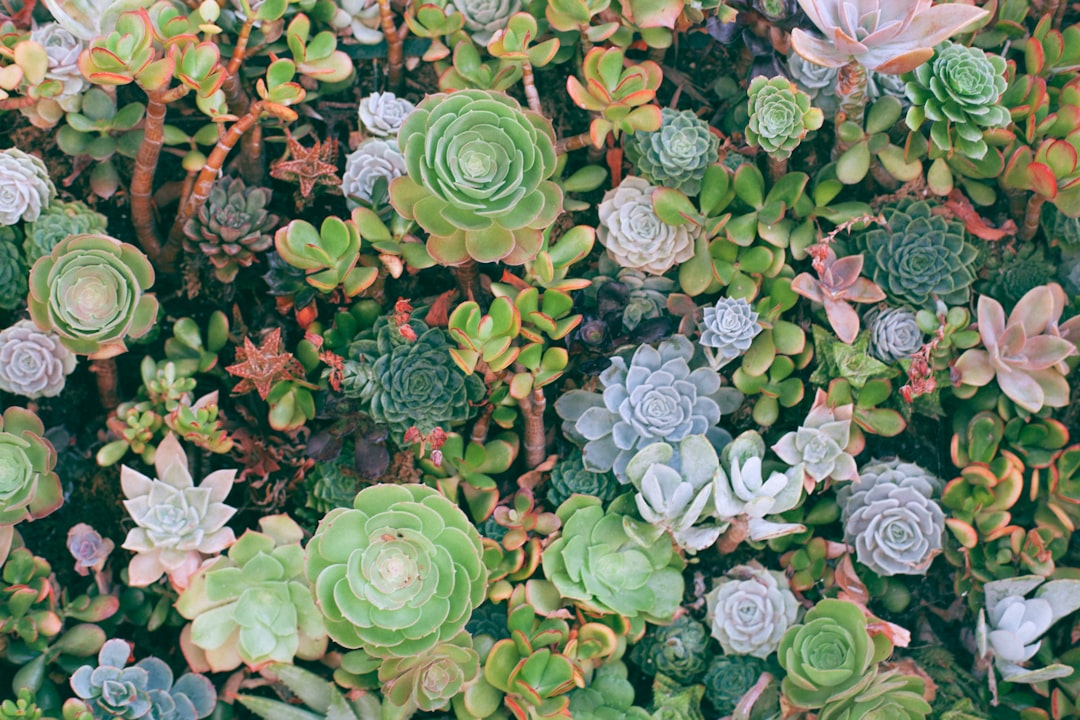
Even before a flower bud makes its appearance, a succulent’s unique growth habits and foliage can offer substantial clues about its potential to bloom and even its species. Many succulents develop specific leaf colors, shapes, or textures that are indicative of their genus and often precede flowering. For instance, some Kalanchoes develop highly ornate, often colorful, leaves that beautifully complement their upcoming floral display. Echeverias, known for their tight, symmetrical rosettes, typically send up slender flower stalks from between their leaves. The overall architecture of the plant – whether it grows in a compact rosette, sprawls as a groundcover, or forms a tall, treelike structure – can narrow down the possibilities. Pay close attention to subtle changes in the plant’s center or leaf axils; these are often the first places where a budding inflorescence begins to emerge, subtly altering the plant’s typical silhouette.
The anatomy of a succulent bloom: what to look for
Once a flower stalk or bud does emerge, its specific characteristics become the most definitive identifiers. Succulent blooms vary widely in their structure, color, and presentation. The inflorescence, or flower cluster, can be a solitary bloom, a dense cyme, a tall spike, or a pendulous raceme. Individual flowers can be star-shaped, tubular, bell-shaped, or even resemble tiny lanterns. The number of petals, their arrangement, and the vibrant palette of colors—from fiery reds and oranges to soft pinks, yellows, and pristine whites—are all crucial details. Observe where the flower stalk originates (from the center, side, or base of the plant), its height relative to the foliage, and the duration of the bloom. These features are often species-specific. For example, the distinctive bell-shaped flowers of many Echeverias or the bright, cheerful clusters of Kalanchoes are readily recognizable.
Here is a comparison of typical bloom characteristics for some popular flowering succulent genera:
| Genus | Typical Flower Stalk | Flower Shape | Common Colors | Notes on Bloom |
|---|---|---|---|---|
| Echeveria | Slender, arching, often reddish | Bell-shaped, nodding | Red, orange, yellow, pink | Often multiple flowers per stalk, appears from rosette center |
| Sedum | Variable, often branched | Star-shaped, small clusters | White, yellow, pink, red | Dense clusters, can cover entire plant |
| Kalanchoe | Upright, sturdy | Tubular, four-petaled | Red, orange, yellow, pink, white | Long-lasting blooms, often dense clusters |
| Aloe | Tall, unbranched or branched spikes | Tubular, often pendulous | Red, orange, yellow | Appears seasonally, attractive to hummingbirds |
| Crassula | Variable, often small clusters | Small, star-shaped | White, pink, yellow | Can be subtle or showy depending on species |
Leveraging resources for precise identification
After making detailed observations, the next step in precise identification involves leveraging available resources. Online plant databases are invaluable; websites like World of Succulents, Succulentopedia, or dedicated botanical garden databases often have extensive photo libraries and detailed descriptions. Many smartphone applications can also assist by using image recognition, though it is always wise to cross-reference their suggestions. Engaging with online succulent communities and forums can connect you with experienced growers who might recognize your plant instantly. Don’t overlook physical resources such as specialized field guides, botanical books, or even local nurseries and botanical gardens where experts can often provide confirmation. By comparing your observations of the plant’s growth habit, foliage, and especially its floral characteristics against these resources, you can confidently identify your flowering succulent.
Identifying flowering succulents transforms the experience of growing these unique plants, adding another layer of appreciation for their often-hidden beauty. We’ve explored the importance of understanding their diverse flowering patterns, from monocarpic wonders to polycarpic beauties, noting how maturity and environmental factors play a crucial role. We then delved into observing the plant’s unique foliage and growth habits, recognizing that these pre-bloom clues can significantly narrow down potential identifications. Finally, we emphasized the critical role of the bloom itself, detailing what specific characteristics—such as flower stalk, shape, color, and petal count—offer definitive identification markers, bolstered by leveraging various identification resources. With patience and keen observation, you can confidently identify and celebrate the magnificent blossoms these resilient plants produce, deepening your connection to the vibrant world of succulents and enjoying their full botanical splendor.
Image by: Maxim Potyomkin