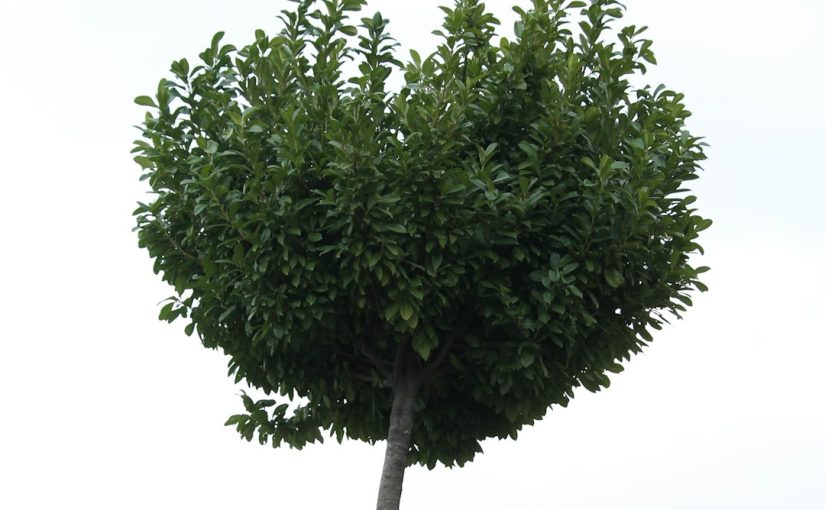
The journey of a mighty oak, a graceful maple, or a vibrant cherry tree begins humbly as a tiny sapling. For anyone engaged in gardening, forestry, landscaping, or simply appreciating nature, the ability to identify these young trees is an invaluable skill. Distinguishing a desirable native species from an invasive newcomer, or understanding which tree will mature into a suitable addition to your landscape, starts at this crucial stage. While identifying mature trees often relies on distinct bark, full canopy shapes, and fruiting bodies, saplings present a unique set of challenges and diagnostic features. This guide will walk you through the essential techniques and characteristics to confidently identify tree saplings, empowering you to better understand and manage the natural world around you.
The basics of sapling identification
Before diving into specific characteristics, it’s important to understand what makes a sapling distinct. A sapling is typically a young tree, generally under 6 feet tall, that has outgrown its seedling stage but has not yet reached maturity. At this stage, many of the mature features like deep furrows in the bark or characteristic fruit may not be present, making identification a focused exercise in observing early growth traits.
One of the first things to note is the presence of cotyledons, or seed leaves. These are the embryonic leaves that emerge first from the germinating seed. They often look very different from the plant’s true leaves and typically wither away as the true leaves develop. The true leaves are the ones that follow, exhibiting the distinctive shape, margin, and venation patterns characteristic of the species. Pay close attention to these initial true leaves, as they provide critical clues. Observe the sapling’s overall growth habit: is it slender and straight, or does it tend to branch out quickly? Is it hairy or smooth? Even the color of the young stem can be an early indicator, ranging from green to reddish or brownish hues.
Deciphering leaf characteristics
Leaves are often the most reliable identifier for young saplings, offering a wealth of information in their shape, arrangement, and texture. Mastering the nuances of leaf analysis will significantly enhance your identification skills.
- Leaf arrangement: This refers to how leaves are attached to the stem.
- Alternate: Leaves appear one at a time at different points along the stem, staggering their positions.
- Opposite: Two leaves grow directly across from each other at the same point on the stem. This is a very strong identifier, as fewer tree species exhibit this pattern.
- Whorled: Three or more leaves grow around the stem at the same point.
- Leaf type:
- Simple: A single blade attached to the stem by a petiole (leaf stalk).
- Compound: Multiple leaflets attached to a central stalk (rachis), which is then attached to the main stem. Compound leaves can be further classified as pinnate (leaflets arranged along a central axis) or palmate (leaflets radiating from a single point).
- Leaf margins: The edges of the leaf blade provide important clues.
- Entire: Smooth edges, without teeth or lobes.
- Serrate: Toothed edges, like a saw blade. Can be finely serrate or coarsely serrate, and single or double serrate.
- Lobed: Indentations or projections along the margin, creating distinct lobes.
- Undulate: Wavy margins.
- Venation pattern: The arrangement of veins within the leaf blade. Common patterns include palmate (veins radiating from a central point) and pinnate (a central main vein with smaller veins branching off).
- Leaf shape: Beyond the margin, the overall outline of the leaf (e.g., oval, heart-shaped, lance-shaped, round) is a key feature.
Here’s a simplified table illustrating key leaf features for common sapling groups:
| Leaf type | Arrangement | Margin example | Common sapling examples |
|---|---|---|---|
| Simple | Alternate | Lobed, Serrate | Oaks, Elms, Birches |
| Simple | Opposite | Lobed, Entire | Maples, Dogwoods |
| Compound | Alternate | Serrate, Entire | Hickories, Ashes (some), Black Locust |
| Compound | Opposite | Serrate | Ashes (most), Boxelder |
Beyond the leaves: bark, buds, and branching patterns
While leaves are paramount, other features on a sapling can provide confirmatory or primary identification clues, especially when leaves are absent or damaged.
- Bark: Even on young saplings, bark can offer insights. It may not have the deep furrows of a mature tree, but observe its texture: is it smooth, slightly rough, peeling, or does it have distinctive lenticels (small pores)? The color can also vary from species to species (e.g., greenish for some young maples, reddish-brown for cherries).
- Buds: Winter buds, located at the tips of twigs and in leaf axils, are often highly characteristic. Look for their size, shape (pointed, rounded), color, and whether they have scales (covered buds) or are naked (no scales). The arrangement of buds (alternate or opposite) mirrors the leaf arrangement and is a vital clue, particularly for deciduous trees in winter.
- Branching pattern: Reinforcing the leaf and bud arrangement, the way a sapling’s branches emerge from the main stem can be alternate or opposite. This pattern persists throughout the tree’s life and is a reliable feature.
- Thorns or prickles: The presence of thorns (modified stems) or prickles (epidermal outgrowths) on the stem or branches is an unmistakable identifier for species like hawthorns, black locusts, or roses.
Habitat and other helpful indicators
A sapling doesn’t grow in isolation; its environment provides context that can aid in identification. Understanding the habitat and looking for other subtle signs can narrow down possibilities significantly.
- Growing conditions: Observe where the sapling is growing. Is it in a wet, marshy area, sandy soil, rich forest floor, or an open, disturbed field? Some trees are highly specialized to certain soil types or moisture levels. For example, willows and birches often prefer wetter conditions, while pines thrive in poorer, well-drained soils.
- Associated plants: What other plants are growing nearby? The presence of specific understory plants or mature trees of a certain species can suggest what type of saplings might be present. Finding a small sapling beneath a large mature oak, for instance, strongly suggests it could be an oak sapling.
- Smell: Some tree species have a distinctive odor when a twig is snapped or a leaf is crushed. For example, sassafras has a spicy, root-beer-like scent, while black cherry twigs smell like bitter almonds.
- Exudates: While less common on very young saplings, some species produce sap, resin, or latex when a leaf or twig is broken. Pines and firs exude resin, while some milkweeds (though not trees) produce a milky latex.
By combining these observations about the sapling’s surroundings with its physical attributes, you can create a comprehensive profile that leads to a confident identification.
Identifying tree saplings is a rewarding skill that deepens your connection to the natural world and empowers informed decisions, whether you’re managing a forest, cultivating a garden, or simply exploring the outdoors. We’ve covered the crucial steps, from recognizing the initial true leaves and understanding their arrangement, type, and margins, to examining bark, buds, and branching patterns. We also explored how habitat clues and unique features like thorns or smells can significantly aid in precise identification. Remember that practice is key; the more you observe and compare, the more intuitive the process will become. Utilize reliable field guides, online resources, and even local botanical experts to confirm your findings. With patience and keen observation, you’ll soon be able to confidently name the nascent giants around you, appreciating their potential and contributing to their successful growth and conservation.
Image by: Emre Coskun