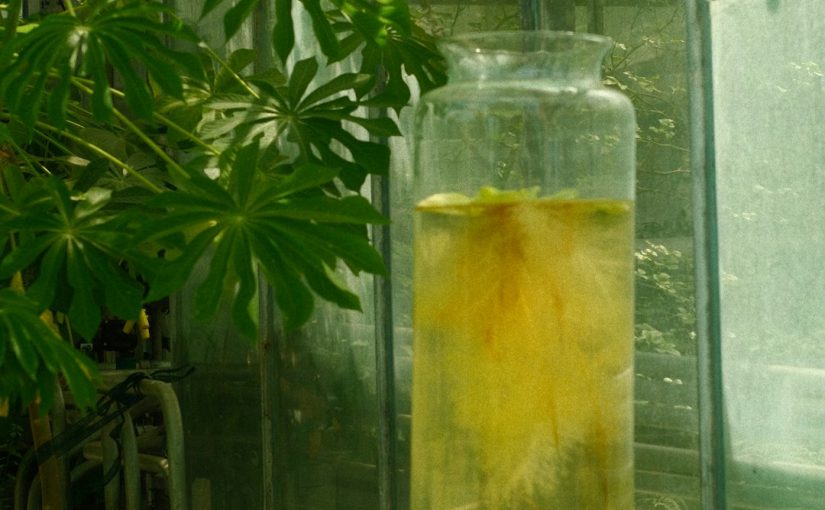
Welcome to the fascinating world beneath the water’s surface, where even the simplest aquatic plants perform vital biological processes that can be observed with the naked eye. One common sight in aquariums and biology classrooms alike is the phenomenon of tiny bubbles emerging from the leaves of Elodea canadensis, a popular freshwater plant often used in scientific demonstrations. These delicate spheres of gas offer a direct visual cue to the plant’s metabolic activity, sparking curiosity about their origin. Understanding what causes these bubbles provides profound insights into plant physiology, particularly the fundamental process that underpins nearly all life on Earth. In this article, we will explore the intricate mechanisms responsible for this bubble production, delving into the core biological reactions and environmental factors at play.
The remarkable process of photosynthesis
At the heart of bubble formation on Elodea leaves lies photosynthesis, the cornerstone process by which plants convert light energy into chemical energy. This intricate biochemical pathway primarily occurs within the chloroplasts of plant cells. During photosynthesis, carbon dioxide (CO2) from the surrounding water and water (H2O) itself are utilized as reactants. Energized by sunlight, these molecules are transformed into glucose, a sugar that serves as the plant’s food source, and crucially, oxygen (O2) as a byproduct. The chemical equation for photosynthesis—6CO2 + 6H2O + Light Energy → C6H12O6 + 6O2—clearly shows oxygen as a product. Since Elodea is a submerged aquatic plant, the oxygen gas produced within its leaf cells cannot easily diffuse into the surrounding water once the water becomes saturated. Instead, it accumulates, forming visible bubbles that eventually detach and float to the surface, offering a direct, measurable indication of photosynthetic activity.
Environmental factors influencing bubble production
The rate at which Elodea produces oxygen bubbles is not constant; it is significantly influenced by several key environmental factors. These factors directly impact the efficiency and speed of photosynthesis. Understanding their roles allows us to manipulate and observe the plant’s metabolic responses. The primary environmental drivers include light intensity, carbon dioxide concentration, and temperature.
- Light intensity: As the primary energy source for photosynthesis, light directly correlates with bubble production. Higher light intensity generally leads to a faster rate of photosynthesis and thus more oxygen bubbles, up to a saturation point where other factors become limiting.
- Carbon dioxide concentration: CO2 is a crucial reactant. An adequate supply of dissolved carbon dioxide in the water is essential for efficient photosynthesis. If CO2 levels are low, the rate of photosynthesis will decrease, resulting in fewer bubbles, even under optimal light conditions.
- Temperature: Photosynthesis is an enzyme-mediated process, meaning it has an optimal temperature range. Within a certain range, increasing temperature can increase the rate of enzymatic reactions and therefore bubble production. However, temperatures that are too high or too low can denature enzymes or slow down reactions, respectively, leading to a decrease in photosynthetic output.
To illustrate these relationships, consider the following table:
| Environmental Factor | Effect on Photosynthesis Rate | Impact on Bubble Production |
|---|---|---|
| Increased Light Intensity | Increases (up to saturation) | More frequent and larger oxygen bubbles |
| Increased Carbon Dioxide | Increases (up to saturation) | More frequent and larger oxygen bubbles |
| Optimal Temperature | Maximizes reaction efficiency | Highest rate of oxygen bubble formation |
| Suboptimal Temperature (too low/high) | Decreases reaction efficiency | Fewer or no oxygen bubbles |
The anatomy of elodea and gas exchange
The physical structure of Elodea leaves also plays a crucial role in the visible formation of oxygen bubbles. Unlike terrestrial plants, which typically possess stomata on their leaves to regulate gas exchange with the atmosphere, Elodea is a submerged aquatic plant. Its leaves are remarkably thin, often only one or two cell layers thick, lacking a thick cuticle or well-developed stomata. This minimalist structure facilitates efficient absorption of dissolved carbon dioxide directly from the surrounding water and the subsequent release of oxygen. As oxygen is produced internally within the leaf cells during photosynthesis, it dissolves into the cell’s cytoplasm and then into the surrounding water. However, if the rate of oxygen production exceeds the rate at which it can dissolve and diffuse away, the gas begins to accumulate. Because gas is less soluble in water than many other substances and has lower density, it coalesces into small pockets. These pockets of oxygen gas become trapped on the hydrophobic surfaces of the leaves or within tiny air spaces, eventually growing large enough to become visible bubbles that detach and rise.
Beyond photosynthesis: other potential causes
While photosynthesis is overwhelmingly the primary reason for bubbles on Elodea leaves, it is worth briefly considering other less common or less significant causes. One possibility is the release of dissolved gases from the water itself. If water that was previously cold and contained a high concentration of dissolved gases (like oxygen, nitrogen, and carbon dioxide) is warmed, the gases become less soluble and can come out of solution, forming bubbles on surfaces, including plant leaves. However, these bubbles would be composed of various atmospheric gases, not solely oxygen, and would typically form even on inert surfaces. Another, less likely, scenario involves physical damage to the leaves. If a leaf is torn or cut, air trapped within the plant’s tissues or gas produced through respiration could potentially escape. However, such instances would usually result in localized bubbling near the injury rather than widespread bubble formation across healthy leaves. Therefore, when observing continuous, widespread bubbling from healthy Elodea leaves under light, photosynthesis remains the most robust and scientifically supported explanation.
In conclusion, the enchanting spectacle of bubbles emanating from Elodea leaves is a profound visual testament to the power of photosynthesis, the life-giving process that converts light energy into chemical energy. These tiny spheres are almost entirely composed of oxygen gas, a crucial byproduct of the plant’s efforts to produce its own food. We have explored how environmental elements such as light intensity, carbon dioxide concentration, and temperature critically influence the rate of this bubble production, underscoring the plant’s responsiveness to its surroundings. Furthermore, Elodea‘s unique, thin-leaved anatomy facilitates efficient gas exchange, making the accumulation and visible release of oxygen particularly noticeable. While other factors like dissolved gas solubility shifts might occasionally contribute, the consistent and widespread bubbling observed on healthy, illuminated Elodea is a direct, observable indicator of active photosynthesis. This simple classroom demonstration effectively illustrates a fundamental biological principle, offering a tangible link to the intricate processes sustaining our planet’s ecosystems.
Image by: Maciej