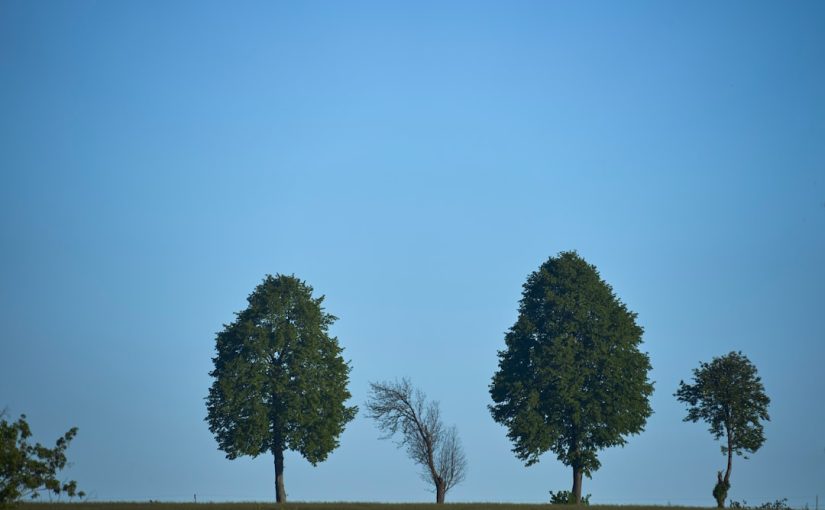
The sight of a tree shedding its leaves often evokes images of crisp autumn air and changing seasons. Deciduous trees, by definition, lose their foliage annually, typically in the fall, as a strategic response to impending winter dormancy and reduced daylight. However, if you’ve ever observed a poplar tree losing its vibrant green leaves in the middle of summer, you might find yourself puzzled. This seemingly anomalous behavior is far from random; instead, it’s a critical survival mechanism employed by these fast-growing trees when faced with environmental adversity. Understanding why poplars ditch their leaves prematurely in the warmer months requires a closer look at their physiology and their often-demanding habitat requirements.
The seasonal rhythm of deciduous trees and poplar’s anomaly
Most deciduous trees follow a predictable cycle: unfurling leaves in spring, photosynthesizing vigorously through summer, and then entering senescence in autumn. This fall leaf drop is primarily triggered by decreasing day length and cooler temperatures, signaling the tree to prepare for winter’s dormancy. The tree reabsorbs valuable nutrients from the leaves before they are shed, ensuring resources are conserved for the next growing season. Poplars (genus Populus), however, often deviate from this standard script. While they too undergo typical autumn senescence, their tendency to shed leaves during the peak of summer is a distinct response to acute stress, rather than a preparation for seasonal change. This mid-summer defoliation can be alarming to observers, suggesting the tree is dying, when in fact, it’s often a desperate yet effective strategy for survival.
Drought stress and water conservation mechanisms
The primary driver behind summer leaf loss in poplar trees is often acute water stress or drought. Poplars are known for their incredibly fast growth rates, which come at a cost: a very high demand for water. Many poplar species are naturally found in riparian zones, along riverbanks, or in areas with consistent access to groundwater. When these water sources diminish due to prolonged dry spells, intense heat, or competition from other plants, poplars are among the first to show symptoms of distress.
To understand this, consider how trees use water. Water is absorbed by roots, transported up to the leaves, and then released into the atmosphere as water vapor through tiny pores called stomata—a process known as transpiration. This process is essential for cooling the tree and for drawing nutrients up from the soil. When water becomes scarce, the tree faces a critical dilemma: continue transpiring and risk severe dehydration, or conserve water by shutting down transpiration.
Poplars, under severe drought, will attempt to close their stomata to reduce water loss. However, if the stress continues, this isn’t enough. The tree initiates a process called abscission, where a specialized layer of cells forms at the base of the leaf petiole (stem). This layer effectively severs the leaf from the branch, allowing it to fall off. By shedding leaves, the tree drastically reduces its total surface area for transpiration, thereby conserving its remaining water reserves. This seemingly drastic measure is a physiological “emergency brake” to prevent complete desiccation and allow the tree to survive until water becomes available again. Once conditions improve, the tree may even push out a flush of new leaves.
Different poplar species exhibit varying degrees of drought tolerance, though most prefer moist conditions:
| Poplar species | Typical habitat | Water requirement | Drought tolerance (relative) |
|---|---|---|---|
| Black poplar (Populus nigra) | Riparian zones, floodplains | High | Low to moderate |
| Cottonwood (Populus deltoides) | River banks, moist lowlands | Very high | Low |
| Aspen (Populus tremuloides) | Moist, well-drained soils | Moderate to high | Moderate |
| Lombardy poplar (Populus nigra ‘Italica’) | Moist, fertile soils | High | Low |
Nutrient conservation and pest/disease management
While drought is the most common culprit, summer leaf drop in poplars can also serve other protective functions. One such function is nutrient conservation. If the tree is under severe stress, whether from drought, poor soil quality, or other environmental factors, maintaining a full canopy of leaves requires a significant investment of resources. By shedding leaves, particularly older or less efficient ones, the tree can reallocate vital nutrients like nitrogen, phosphorus, and potassium to more critical areas, such as developing buds or maintaining trunk and root health. This allows the tree to “hunker down” and preserve its metabolic capital until more favorable conditions return.
Furthermore, summer defoliation can act as a natural pest and disease control mechanism. If a significant portion of the canopy becomes heavily infested with insects or infected by fungal diseases, shedding these compromised leaves can be a way to prevent the spread of the problem to healthier parts of the tree. It essentially “cuts its losses,” sacrificing damaged tissues to protect its overall health and viability. While not the primary reason for widespread summer defoliation, it can be a contributing factor or an adaptive response in combination with other stressors.
Other contributing factors and species variation
Beyond acute drought, several other environmental and physiological factors can contribute to or exacerbate summer leaf loss in poplar trees. Extreme heat waves, even in the presence of adequate soil moisture, can increase transpiration rates to unsustainable levels, leading to heat stress that mimics drought symptoms and triggers abscission. Poor soil quality, such as compacted or nutrient-deficient soils, can hinder root development and water uptake, making trees more susceptible to drought. Root damage, either from construction, disease, or pests, can also impair the tree’s ability to absorb water, regardless of availability.
It is also important to note that genetic variation exists within the Populus genus. Some poplar species or cultivars may be inherently more sensitive to specific environmental stresses than others. For example, hybrid poplars, often bred for rapid growth, might be particularly prone to summer leaf drop if their specific water and nutrient demands are not met. Therefore, observing summer leaf loss in poplars is often an indicator of a complex interplay of environmental conditions stressing the tree beyond its normal adaptive capacity.
The puzzling phenomenon of poplar trees losing their leaves in summer, while seemingly counterintuitive for deciduous species, is a testament to their remarkable adaptability in the face of environmental challenges. Primarily, this premature defoliation is a desperate but effective survival strategy against severe drought stress, allowing the tree to drastically reduce water loss through transpiration when soil moisture is critically low. Beyond water conservation, this self-pruning can also serve to conserve valuable nutrients or to shed leaves heavily afflicted by pests or diseases, preventing wider infestation. Various factors, including intense heat, poor soil conditions, or specific genetic predispositions, can contribute to this stress response.
Ultimately, summer leaf loss in poplars signifies that the tree is under considerable duress and is employing a last-resort mechanism to protect its core vitality. While it might look concerning, it often means the tree is fighting to stay alive, hoping for improved conditions to resume growth. Understanding these dynamics is crucial for gardeners and arborists, as it highlights the importance of consistent moisture and appropriate growing conditions for these fast-growing, water-loving trees, ensuring they can thrive throughout the warmer months.
Image by: Wolfgang Hasselmann