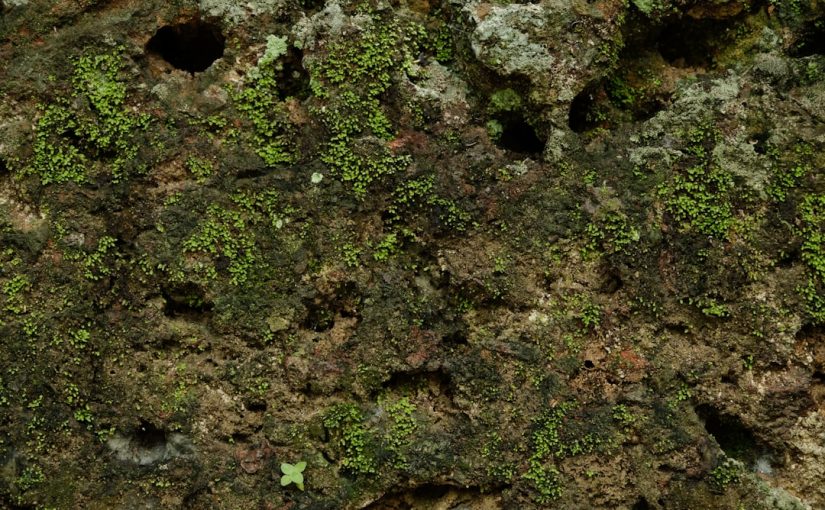
Wandering through a forest, you might often notice a curious phenomenon: patches of vibrant green, grey, or yellow lichen clinging to the bark of trees. What’s even more intriguing is the common observation that these fascinating organisms don’t always distribute themselves evenly around the trunk. Instead, many people report seeing lichen predominantly growing on just one side of a tree. This observation has fueled folklore and sparked numerous discussions, often leading to assumptions about cardinal directions. Is there a scientific explanation behind this asymmetrical growth pattern, or is it merely a trick of the eye? This article delves into the ecological factors and environmental nuances that dictate where lichen chooses to establish its home on a tree, unraveling the mystery behind its seemingly one-sided preference.
The common myth and the biological reality
For generations, a popular wilderness adage suggested that lichen consistently grows on the north side of trees, serving as a natural compass for lost travelers. While a charming notion, this idea is largely a misconception. The truth about lichen growth is far more complex and less about a fixed directional preference and more about a combination of localized environmental conditions. Lichen itself is a remarkable symbiotic organism, a partnership between a fungus and an alga (or cyanobacterium). The alga performs photosynthesis, producing food, while the fungus provides protection, structure, and absorbs water and minerals. Unlike parasitic plants, lichen does not harm the tree it grows on; it merely uses the bark as a substrate, much like a tiny, living canvas. Its survival depends entirely on external factors, making it highly sensitive to subtle variations in its microenvironment.
Environmental factors shaping growth patterns
The primary drivers behind lichen’s asymmetrical growth are fundamental environmental elements: sunlight, moisture, and wind. Lichen thrives in consistently moist conditions. Direct, prolonged exposure to intense sunlight can dry out lichen quickly, inhibiting its growth. Therefore, the side of the tree that receives less direct, scorching sun for the longest periods – often the shadier side – tends to be more favorable. In the Northern Hemisphere, this might often lean towards the north or east side, which receive less intense midday sun compared to the south or west. However, this is not a universal rule. Prevailing winds also play a crucial role. A tree side constantly battered by drying winds will lose moisture more rapidly, making it less hospitable for lichen. Conversely, a sheltered side that retains dew or rain moisture for longer periods will offer a more welcoming habitat. Rainfall patterns and how moisture trickles down the bark also contribute, as some sides of a tree might simply catch and retain more precipitation than others.
| Environmental factor | Effect on lichen growth | Typical preferred side (Northern Hemisphere) |
|---|---|---|
| Sunlight intensity | High intensity causes desiccation; lower intensity retains moisture. | North, East (less direct sun) |
| Moisture retention | Essential for metabolic processes; absence inhibits growth. | Shadier, sheltered side (retains dew/rain) |
| Wind exposure | High exposure leads to drying and physical damage. | Sheltered side |
| Rainfall/humidity | Direct source of water; high humidity reduces evaporation. | Side catching/retaining most precipitation |
The influence of microclimates and tree specifics
Beyond broad environmental factors, the specific microclimate surrounding each tree, and even the tree’s individual characteristics, can profoundly influence where lichen decides to grow. A tree leaning heavily to one side, for instance, might create a permanently shaded and sheltered area on its underside, regardless of cardinal direction. Similarly, the texture of the tree’s bark can make a difference; rougher, more furrowed bark can trap moisture more effectively than smooth bark, providing more niches for lichen to cling to and flourish. Nearby vegetation, such as dense shrubs or other trees, can also create localized shading and windbreaks that override any general directional preference. Imagine a tree on the edge of a forest versus one deep within the canopy. The former will experience far different sun and wind exposure than the latter. Therefore, what appears to be a “one-sided” preference is actually a highly localized response to the most hospitable conditions available on that particular tree, in that particular spot.
It’s not always one side, and variability is key
While the observation of lichen on “only one side” is common, it’s important to recognize that this isn’t a universal rule. There are many trees where lichen grows symmetrically, or where the “preferred” side differs from the commonly assumed north-facing direction. In densely forested areas, where sunlight is scarce and humidity is high, lichen might cover entire tree trunks uniformly due to consistently favorable conditions all around. Conversely, in open, exposed areas, only the most protected crevice on any side might host a patch of lichen. The variability is key; it underscores that lichen growth is not governed by a simple compass rule but by a complex interplay of environmental factors that create unique microclimates on each tree. Next time you encounter a lichen-covered tree, take a moment to observe the surrounding environment: the tree’s lean, the direction of the strongest winds, the nearest shade – these are the true indicators of why lichen chooses its home.
The intriguing sight of lichen growing predominantly on one side of a tree is a testament to the subtle yet powerful influence of environmental factors on living organisms. Far from being a simple directional indicator, this asymmetrical growth is a sophisticated response to localized microclimates. We’ve explored how a combination of sunlight intensity, moisture retention, prevailing winds, and specific tree characteristics like bark texture and lean all contribute to creating the ideal conditions for these unique symbiotic organisms. The “north-side” myth dissolves under scientific scrutiny, revealing a dynamic interplay of elements where the shadiest, most consistently moist, and least wind-exposed side of a tree ultimately offers the most hospitable home. Understanding this phenomenon enhances our appreciation for the intricate ecological relationships at play in nature, reminding us that even the smallest life forms are finely tuned to their immediate surroundings.
Image by: Siborey Sean