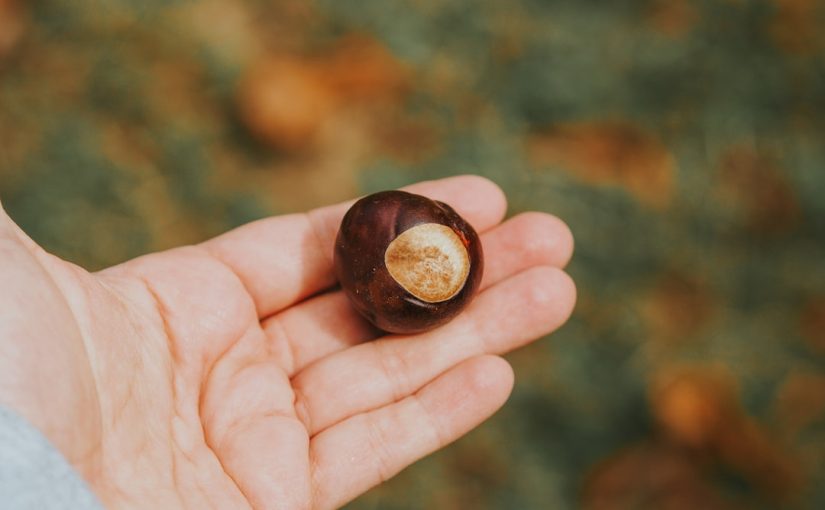
For generations, the humble chestnut has been whispered about as a secret weapon against one of nature’s most common household invaders: spiders. This age-old remedy, particularly popular in certain European traditions, posits that simply placing chestnuts around your home can deter these eight-legged arachnids, keeping your living space web-free and comfortable. While many natural pest control methods rely on strong scents or irritating compounds, the allure of the chestnut lies in its perceived simplicity and natural origin. But is there any truth to this intriguing folk remedy, or is it merely an enduring myth passed down through the ages? This article delves into the fascinating world of spider control with chestnuts, exploring the folklore, the potential science, and practical applications for homeowners seeking a chemical-free approach.
The traditional wisdom behind chestnuts and spiders
The notion of using chestnuts to repel spiders is a well-entrenched piece of folklore, particularly in the United Kingdom and parts of Europe, where horse chestnuts (often called “conkers”) are abundant. The tradition often involves gathering these shiny, brown nuts in autumn and strategically placing them on windowsills, in corners, and near doorways. The belief suggests that something within the chestnut acts as a deterrent, keeping spiders at bay. This isn’t just a random act; there’s a common theory that the chestnuts emit a substance, perhaps a chemical compound, that spiders find unpleasant or even toxic, prompting them to avoid areas where the nuts are present. Historically, before the advent of modern pesticides, people relied on natural observations and remedies to manage household pests, and the chestnut myth is a prime example of such an adaptive practice, passed down through families and communities as a simple, accessible solution.
The science (or lack thereof) supporting the claim
While the traditional belief in chestnuts as a spider repellent is strong, robust scientific evidence to support this claim remains largely elusive. The primary chemical often cited as the active deterrent in horse chestnuts is aescin, a mixture of saponins. Saponins are natural compounds found in various plants, known for their detergent-like properties and sometimes for their insecticidal or fungicidal effects. However, scientific studies specifically demonstrating aescin’s effectiveness as a spider repellent when emitted from an intact chestnut are scarce, if not non-existent. Most research on saponins focuses on their effects when extracted and applied directly, not through passive emission. Furthermore, spiders are not insects; they belong to the class Arachnida, and what repels an insect may not affect a spider. Therefore, while anecdotal reports abound, the scientific community generally views the chestnut method with skepticism, suggesting that any perceived success might be due to other factors or simply the placebo effect. The absence of compelling data means that, from a scientific standpoint, the chestnut remains an unproven solution for spider control.
Here’s a comparison of anecdotal versus scientific perspectives:
| Aspect | Anecdotal/Folk Belief | Scientific View |
|---|---|---|
| Active compound | Chestnuts emit a spider-repelling substance (often thought to be saponins). | Saponins are present but not proven to be effectively emitted or to repel spiders in this context. |
| Mechanism | Spiders find the scent or substance unpleasant/toxic and avoid it. | No known mechanism for passive emission from intact chestnuts to repel spiders. Spiders have poor eyesight and rely more on vibration and touch than scent. |
| Observed effect | Reduced spider presence in areas with chestnuts. | Any perceived reduction is likely coincidental, due to other factors, or observational bias. |
| Evidence basis | Generational tradition, personal experiences. | Lack of controlled studies, empirical data specifically on spider repulsion by intact chestnuts. |
How to practically use chestnuts for spider control (if you choose to)
If you’re inclined to try this traditional method, despite the lack of scientific proof, using chestnuts for spider control is straightforward and poses minimal risk, provided they are not ingested. The key is to source horse chestnuts, not edible sweet chestnuts, as the former are the type traditionally believed to have repellent properties. Gather fresh horse chestnuts in the autumn and place them strategically around your home. Common placements include windowsills, corners of rooms, behind furniture, in closets, and near external doorways – essentially, anywhere you’ve noticed spiders or their webs. Some proponents suggest pricking the chestnuts with a pin or knife to help release any potential compounds, although this is also unproven to increase efficacy. The chestnuts should be replaced annually, as they will dry out over time, and any theoretical repellent properties would diminish. It’s important to remember that horse chestnuts are toxic if ingested, so keep them out of reach of small children and pets, particularly dogs, who might be tempted to chew on them.
Beyond chestnuts: holistic spider management
While chestnuts may offer a natural and chemical-free experiment in spider deterrence, it’s crucial to approach spider control holistically. Relying solely on chestnuts is unlikely to provide a definitive solution for a significant spider problem. Effective, long-term spider management involves several practical steps that address their environment and food sources. Regularly cleaning your home, including vacuuming corners, under furniture, and along baseboards, removes webs, egg sacs, and spiders themselves. Decluttering storage areas like attics, basements, and garages eliminates hiding spots. Sealing cracks and crevices in your home’s foundation, around windows, and under doors can prevent spiders from entering. Reducing other insect populations in and around your home is also vital, as spiders typically enter dwellings in search of prey. Outdoor lighting that attracts insects should be minimized, or yellow “bug lights” can be used. Ultimately, a combination of good hygiene, exclusion techniques, and consistent maintenance will yield far more reliable results in keeping spiders out than any single folk remedy.
The age-old belief that chestnuts can repel spiders is a charming piece of folklore that continues to fascinate and prompt experimentation among homeowners seeking natural pest control. While the traditional method suggests placing horse chestnuts strategically to deter arachnids, a closer look reveals a significant gap between anecdotal enthusiasm and scientific validation. The primary compound often cited, aescin, is present in horse chestnuts, but there is no conclusive scientific evidence to demonstrate its passive emission from intact nuts in concentrations sufficient to repel spiders, which are, importantly, not insects. Therefore, while trying this method is harmless and chemical-free, it is highly unlikely to be a standalone solution for effective spider control. Instead, integrating chestnuts into a broader strategy of diligent cleaning, sealing entry points, reducing insect prey, and regular removal of webs offers a far more robust and reliable approach to managing spider populations in your home. View chestnuts as a low-risk, supplementary measure rather than a guaranteed deterrent.
Image by: Barbara Burgess