Choosing the right type of gravel or stone for your landscaping or construction project goes far beyond simply picking a color or texture. One of the most critical factors, often overlooked by those new to the world of aggregates, is size. The dimensions of these natural materials profoundly influence their performance, aesthetics, and suitability for various applications. From ensuring proper drainage and stability to creating visually appealing pathways or robust retaining solutions, understanding the spectrum of available sizes is paramount. This article will delve into the diverse world of gravel and stone dimensions, exploring how different sizes are categorized, what they’re best used for, and why selecting the appropriate size is fundamental to the success and longevity of your project.
The fundamentals of gravel and stone sizing
Before exploring specific sizes, it’s essential to grasp how gravel and stone are categorized. Aggregate sizing is primarily determined by a screening process, where materials are passed through a series of progressively smaller sieves or screens. The resulting material is then designated by its “nominal size” or “gradation,” which represents the typical range of particle sizes within a batch. It’s important to remember that these aren’t exact, uniform measurements for every single piece, but rather an average or a range that the majority of the material falls into. Terminology can vary slightly by region and supplier, but common designations often refer to the size of the screen opening the material passed through or was retained by. For example, “3/4 inch gravel” typically means most pieces are around 3/4 of an inch, though it will include a range from slightly smaller to slightly larger.
Common small to medium gravel sizes and their uses
When thinking about residential landscaping, pathways, or smaller construction elements, several specific sizes of gravel and stone come to mind, each with distinct characteristics and applications. These typically range from fine materials up to about one inch in diameter.
- Decomposed granite (DG): Often referred to as “DG,” this material consists of very fine particles mixed with small, angular pieces, usually ranging from fines up to about 3/8 inch. It compacts very well, creating a natural, permeable surface ideal for rustic pathways, patios, and erosion-resistant groundcover. Its earthy tones blend seamlessly into natural landscapes.
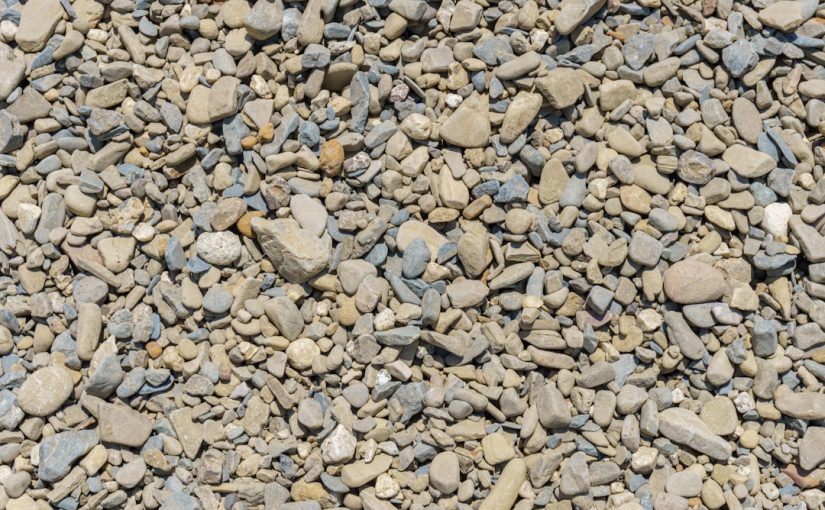
- Pea gravel: True to its name, pea gravel consists of small, rounded stones, typically ranging from 1/8 inch to 1/2 inch in diameter. Its smooth texture makes it comfortable for walking, perfect for playgrounds, decorative groundcover, pathways, and drainage applications where a softer look is desired. The rounded edges also help with water percolation.
- Crushed stone #8 (3/8″ to 1/2″): This is a common choice for driveways, as a top dressing, or for mixing with asphalt and concrete. Its angular shape allows for excellent compaction and interlocking, providing a stable surface. It’s also frequently used for drainage layers.
- Crushed stone #57 (1/2″ to 1″): A highly versatile and popular aggregate, #57 stone is used extensively for driveways, as a sub-base for patios and pavers, and for various drainage projects. Its mixture of sizes offers good compaction while still allowing for significant water flow, making it a workhorse in many construction scenarios.
Larger stone varieties and their applications
For projects requiring more substantial material – whether for structural support, significant drainage, or pronounced aesthetic features – larger stone varieties become the ideal choice. These stones typically range from over one inch up to several feet in diameter.
- Crushed stone #3 (1 1/2″ to 2 1/2″): This larger crushed stone is excellent for heavy drainage applications, such as large culverts, septic drain fields, and substantial base layers where significant water flow is critical. Its size prevents it from being easily displaced by water.
- River rock (1″ to 6″ and larger): These are naturally rounded stones, often smoothed by water erosion. They come in a wide array of sizes and colors, making them highly sought after for decorative landscaping, dry creek beds, erosion control in gentle slopes, and as accents around water features or plant beds. Their smooth, aesthetic appeal is a major draw.
- Riprap (4″ to 24″ and larger): Riprap refers to larger, angular stones used primarily for erosion control along shorelines, stream banks, and steep slopes. The irregular shapes interlock tightly, creating a robust barrier against water and wind erosion. The size chosen depends on the severity of the erosion threat and the force of the water.
Gradation and its impact on project success
Beyond the simple “size” designation, understanding the concept of gradation is crucial for selecting the optimal aggregate. Gradation refers to the distribution of particle sizes within a given sample of gravel or stone. A “well-graded” material contains a wide range of particle sizes, from fine to coarse. This variety allows smaller particles to fill the voids between larger ones, resulting in excellent compaction, stability, and load-bearing capacity. Such materials are ideal for bases under pavers, driveways, or foundations where strength is paramount.
Conversely, a “uniformly graded” or “clean” stone consists of particles that are all roughly the same size, with very few fines. Materials like pea gravel or #57 stone, when specified as “clean,” fall into this category. The large, interconnected voids between uniform particles make these materials excellent for drainage, as water can flow through them unimpeded. However, they typically offer less stability and compaction than well-graded materials. The presence or absence of “fines” (very small particles) also dramatically affects permeability and compaction. Always consider whether your project requires structural integrity, efficient drainage, or a balance of both.
| Size Designation | Approximate Particle Size Range | Common Uses |
|---|---|---|
| Decomposed granite (DG) | Fines – 3/8″ (0-10mm) | Natural paths, patios, groundcover |
| Pea gravel | 1/8″ – 1/2″ (3-13mm) | Pathways, playgrounds, decorative, drainage |
| Crushed stone #8 | 3/8″ – 1/2″ (10-13mm) | Driveway top layer, concrete mix, drainage |
| Crushed stone #57 | 1/2″ – 1″ (13-25mm) | Driveway base, sub-base for patios/pavers, general drainage |
| Crushed stone #3 | 1 1/2″ – 2 1/2″ (38-64mm) | Heavy drainage, septic systems, erosion control |
| River rock | 1″ – 6″ (25-150mm) | Decorative landscaping, dry creek beds, erosion control |
| Riprap | 4″ – 24″+ (100-600+mm) | Severe erosion control, bank stabilization |
As we’ve explored, the world of gravel and stone sizes is incredibly diverse, offering a precise solution for nearly every project imaginable. From the delicate fines of decomposed granite perfect for natural pathways to the formidable scale of riprap engineered for robust erosion control, each size and gradation possesses unique properties that dictate its suitability. Understanding these distinctions is not merely an academic exercise; it is fundamental to achieving successful outcomes in your landscaping, construction, or drainage endeavors. The right size ensures proper drainage, optimal compaction, long-term stability, and the desired aesthetic appeal. Before embarking on your next project, take the time to consider the specific functional requirements and consult with local aggregate suppliers or experienced professionals to guarantee you select the exact material that will bring your vision to life and stand the test of time.
Image by: Guillermo Diaz