Cultivating watermelons can be an incredibly rewarding experience, offering sweet, juicy delights straight from your garden. However, many enthusiastic growers often overlook a crucial step in achieving that perfect harvest: pruning. Unruly watermelon vines can quickly spread, becoming a tangled mess that directs precious energy away from fruit production. Without proper guidance, your plants might yield smaller, less flavorful watermelons, or even become more susceptible to diseases. Understanding how and why to prune your watermelon vines is key to maximizing your yield, improving fruit quality, and maintaining a healthier, more manageable garden space. This guide will walk you through the essential techniques to confidently prune your watermelon plants, ensuring a bountiful and delicious harvest.
Why pruning matters for watermelon success
Pruning watermelon vines isn’t merely about aesthetics; it’s a strategic agricultural practice that significantly impacts the overall health and productivity of your plants. One of the primary benefits is the efficient allocation of resources. Watermelon plants, left to their own devices, will produce an abundance of foliage and numerous small fruits, spreading their energy thinly. By judiciously removing non-productive or excess growth, you redirect the plant’s energy towards developing fewer, but significantly larger and sweeter, watermelons. This focused energy allows the plant to pour more sugars and nutrients into the fruits you actually want to ripen.
Beyond resource management, pruning plays a vital role in disease prevention and improved air circulation. Dense, unpruned foliage creates a humid, stagnant microclimate that is an ideal breeding ground for fungal diseases like powdery mildew. Removing some of the leaves and secondary vines opens up the canopy, allowing for better airflow and sunlight penetration. This not only discourages disease but also ensures that sunlight reaches developing fruits, aiding in their ripening process and enhancing their flavor profile. Furthermore, in smaller garden spaces, pruning helps manage the sprawling nature of watermelon vines, keeping them contained and preventing them from shading out other plants or becoming a tripping hazard.
Identifying what to prune: understanding vine structure
Before you make your first cut, it’s essential to understand the basic anatomy of a watermelon plant. A typical watermelon plant consists of a primary vine, which is the main stem originating from the plant’s base. This main vine often produces the earliest and strongest fruits. Growing off the primary vine are secondary vines, also known as lateral branches. These secondary vines can in turn produce their own branches, sometimes called tertiary vines. The goal of pruning is largely to manage these secondary and tertiary vines, as they can quickly become energy sinks without contributing significantly to fruit production.
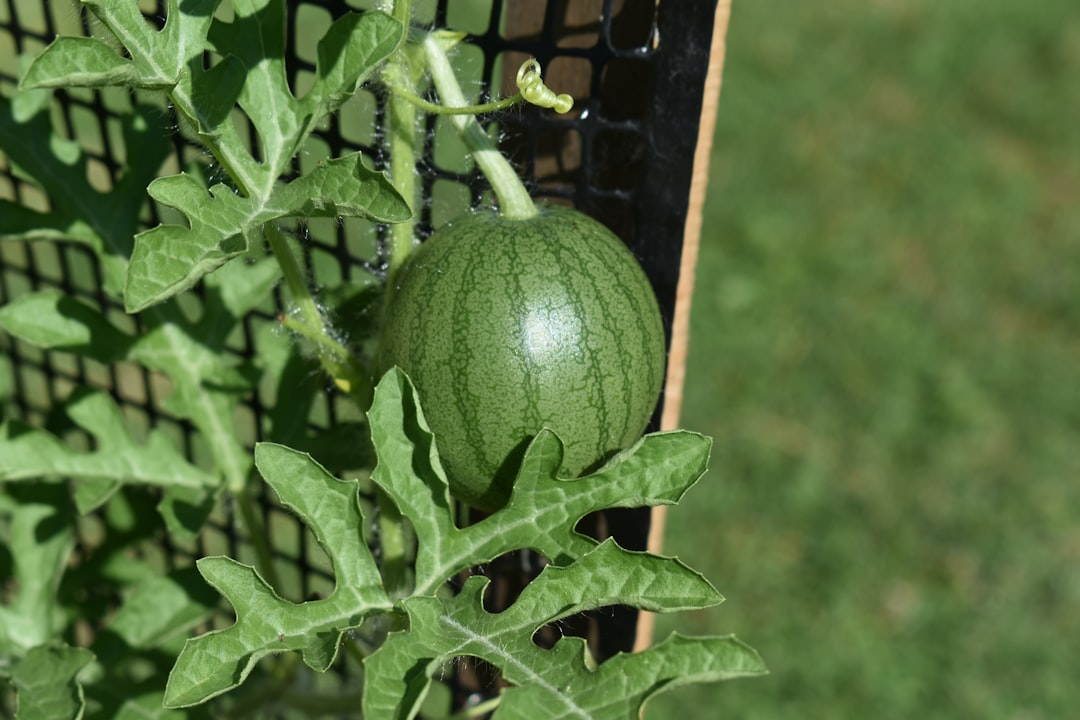
When inspecting your plant, observe where the fruits are setting. Watermelon plants produce both male and female flowers. Female flowers are easily identifiable by the miniature fruit located just behind the flower petals, while male flowers have only a thin stem. Fruits primarily develop on the primary and strong secondary vines. Your strategy should involve identifying overcrowded areas, non-productive secondary vines, and any diseased or damaged foliage. It’s crucial not to confuse the primary vine with a secondary one, as accidentally removing the main vine can severely stunt your plant’s growth and fruiting potential. Take your time to trace each vine back to its origin before deciding where to prune.
The practical steps of pruning watermelon vines
Effective pruning requires sharp, clean tools and a clear understanding of your objectives. Always use a pair of bypass pruners or sharp scissors that have been sterilized with rubbing alcohol to prevent the spread of diseases. The best time to prune is on a dry, sunny morning, allowing the cuts to heal quickly. Here’s a step-by-step approach to pruning:
- Limit primary vines: Many gardeners opt to allow only 2-3 main (primary) vines per plant. If your plant has developed more, choose the strongest, healthiest ones and carefully snip off the others at their base. This concentrates the plant’s energy.
- Manage secondary vines: Once fruits begin to set on your chosen primary or strong secondary vines, focus on managing other secondary growth. A common technique is to let a secondary vine grow a few leaves beyond a developing fruit (e.g., 2-3 leaves) and then snip its tip. This ensures the leaves can still photosynthesize for the fruit while preventing the vine from growing excessively.
- Remove non-fruiting vines: Any secondary or tertiary vines that are not producing flowers or fruits and appear weak or spindly should be removed entirely. Trace them back to their origin and make a clean cut.
- Eliminate diseased or damaged foliage: Regularly inspect your plants for any yellowing, spotted, or otherwise unhealthy leaves or vines. These should be promptly removed to prevent diseases from spreading to the rest of the plant.
- Consider fruit thinning: For larger, higher-quality watermelons, consider allowing only 1-2 fruits per primary vine, or 2-3 fruits total per plant. Once several fruits have set, remove the smallest or misshapen ones to direct energy into the chosen few.
Here’s a quick guide to common pruning scenarios:
| Pruning Scenario | Action to Take | Benefit |
|---|---|---|
| Excess Primary Vines | Reduce to 2-3 strongest vines. | Focuses plant energy for larger fruit. |
| Non-Fruiting Secondary Vines | Remove entirely at their origin. | Prevents energy waste on unproductive growth. |
| Secondary Vine with Fruit | Prune 2-3 leaves past the fruit. | Provides photosynthesis for fruit, limits sprawl. |
| Diseased/Damaged Leaves | Snip off affected parts immediately. | Prevents disease spread, improves plant health. |
| Too Many Developing Fruits | Remove smallest/weakest fruits. | Promotes larger, sweeter remaining fruit. |
Advanced pruning techniques and common mistakes to avoid
As your watermelon plants mature, you might consider more advanced techniques to optimize your harvest. One such method is “tip pruning” or “pinching back” the very ends of the main vines late in the growing season. This signals to the plant to stop producing new flowers and foliage and instead redirect all its remaining energy into ripening the existing fruits. This is particularly useful in regions with shorter growing seasons where you want to ensure current fruits mature before colder weather sets in.
However, it’s just as important to be aware of common pruning mistakes that can hinder your success. The most frequent error is over-pruning. While pruning is beneficial, removing too much foliage can stress the plant, reduce its ability to photosynthesize, and ultimately decrease your yield. Another mistake is pruning too early in the plant’s life or before fruits have adequately set, as you might inadvertently remove potential fruiting vines. Using dull or dirty tools is a recipe for disaster, creating jagged cuts that are slow to heal and act as entry points for pathogens. Finally, not knowing the difference between primary and secondary vines can lead to accidentally removing the main productive stem. Always observe your plant carefully, understand its structure, and prune with purpose, not just for the sake of cutting.
Mastering the art of pruning watermelon vines is a transformative skill for any gardener, elevating your harvest from good to truly exceptional. By strategically managing your plants’ growth, you empower them to concentrate their vital energy into producing fewer, yet significantly larger, sweeter, and more flavorful watermelons. We’ve explored the fundamental reasons behind pruning, from enhancing resource allocation and improving air circulation to preventing common diseases. We also delved into identifying the key components of your vine structure—primary, secondary, and tertiary vines—and provided a practical, step-by-step guide to making the right cuts. Finally, we touched upon advanced techniques like tip pruning and highlighted crucial mistakes to avoid, ensuring your efforts are productive rather than detrimental. Embrace these techniques with careful observation and a confident hand, and you’ll find that pruning is not just a chore but an investment in a richer, more abundant watermelon season, rewarding you with the luscious fruits of your labor.
Image by: Alexey Demidov